
November 2026 Admissions News
November 2026 Preview –
What’s Coming This Month
📅 Mark Your Calendars – Upcoming November and December Dates
🔬 Rising Researchers –Turn Your Interest in Science Into Published Research This Winter
🎓 Seniors –Early Applications Are In. Now What? Your Guide to the Next Phase of College Admissions
⚕️ Medical School Applicants –4 Medical School Interview Mistakes That Could Hurt Your Chances
📷 In the News – Moon Prep Featured Articles
📊 University Updates – What You Need to Know
🎙 White Coat Club –After You Hit Submit: Your Common App Checklist and What Happens Next
🎙 White Coat Club – Understanding the BSMD App Process
Mark Your Calendars –
Key November & December 2026 Dates
✅ November 15: USA Biolympiad (USABO) [STEM]
✅ November 17: Winter Research Camp starts – Neural Plasticity – register here
✅ November 20: December SAT Registration Deadline
✅ November 23: National Science Bowl [STEM]
✅ December 1: Scholastic Art & Writing Awards [Writing]
✅ December 6: American Rocketry Challenge [STEM]
✅ December 9: [Art] New York Times Editorial Contests (What It’s Like to Grow Up in 2026)

Turn Your Interest in Science into Published Research This Winter
Interested in medicine, neuroscience, or STEM? Don’t wait until college to start building your research experience!
Research is a valuable way to explore your academic interests, develop critical thinking skills, and strengthen your profile for competitive college and BS/MD admissions. But finding meaningful research opportunities as a high school student isn’t always easy.
That’s where Rising Researchers comes in!
This winter, Rising Researchers is offering an exciting Neural Plasticity Research Camp, where students will explore how the brain learns, adapts, and recovers from injury. From memory formation to brain development and neurological recovery, students will dive into fascinating neuroscience topics while learning how to conduct and communicate scientific research.
Rather than simply learning about science, students will develop research and scientific writing skills they can carry into future internships, college, and beyond.
Winter Camp: Neural Plasticity – How the Brain Learns, Changes, and Adapts
Led by Anahit S.
 Schedule: Every Tuesday and Friday (11/17/26 – 12/18/26 ) from 7:00p – 8:30p ET/ 4:00p – 5:30p PT
View the syllabus
Why You Will Love This Camp:
In this camp, students will explore one of neuroscience’s most exciting concepts: neuroplasticity, the brain’s remarkable ability to learn, adapt, and change throughout life.
You’ll explore how neuroplasticity allows the brain to adapt, form new connections, and strengthen or weaken existing ones as you learn new things. Discover how brain cells (neurons) communicate, how synapses and neural circuits change over time, and how these changes shape learning, memory, and brain development.
Throughout the camp, students will build valuable research and critical thinking skills by reading scientific literature, designing a research study, and presenting their findings in front of their peers in a research poster presentation.
This course is tailored to accommodate various skill levels and is suitable for beginners.
 Camp Investment: $3500 (Save $200 | Valid while space remains)
Sign up for this camp now
2027 Camps Coming Soon!
From Cells to Cosmos: Exploring the Biology of Life in the Universe. Camp starts Jan 17. Registration opens soon!
Seniors: Your Guide to the Next Phase of College Admissions
The November 1 and November 15 deadlines mark a major milestone in the college admissions process. For many students, weeks of essay revisions, supplemental applications, and last-minute details are finally behind them. But submitting your Early Action (EA), Early Decision (ED), or first round of BS/MD applications doesn’t mean the work is over.
The next several weeks bring a different set of priorities: monitoring admissions updates, preparing for potential interviews, completing remaining applications, and making informed decisions as results arrive.
Here’s how to navigate the next phase with confidence.
1. Interview Prep Is Underway
Have you been called for an interview? Are you ready?
Interview season is here, and Moon Prep is accepting a limited number of interview prep-only students.
Our team is already helping BS/MD candidates prepare for their upcoming interviews. We offer personalized preparation for both traditional and Multiple Mini Interviews (MMIs).
Don’t walk into your interview unprepared. Spots are limited, so contact us today to get started.
2. Know When to Expect Decisions
While every institution follows its own admissions calendar, Early Decision results typically arrive in mid-December, with many Early Action decisions released between December and February.
For students pursuing BS/MD programs, the timeline can be more complex. An undergraduate acceptance doesn’t necessarily mean you’ve advanced in the medical program’s selection process. Some programs release interview invitations separately, while others notify candidates of their BS/MD status later in the admissions cycle.
What to do now: Check your application portals regularly, monitor your email (including spam folders), and keep track of important dates. Respond promptly to requests for additional materials or interview invitations.
3. Understand What Your Decision Means
When admissions decisions begin arriving, your next steps will depend on both the outcome and the application plan you selected.
If You’re Accepted Early Decision
An ED acceptance generally means you’ve committed to attending that institution. You’ll need to follow the school’s enrollment instructions and withdraw applications to other colleges, subject to any permitted exceptions.
Before completing the process, review your financial aid package carefully. If the offer makes attendance financially unfeasible, contact the admissions or financial aid office to discuss your circumstances rather than simply disregarding the agreement.
If You’re Accepted Early Action
An EA acceptance gives you something valuable: an offer of admission without an immediate enrollment commitment.
Most students have until May 1 to make their final choice, although individual deadlines may vary. Take advantage of this flexibility to compare academic opportunities, financial aid packages, campus environments, and other factors that matter to you.
If you’re pursuing a BS/MD program, remember that admission to the undergraduate institution and admission to the combined medical pathway may be separate decisions.
If You’re Deferred
A deferral means your application remains under consideration, typically in the Regular Decision pool. It isn’t an acceptance, but it isn’t a rejection either.
Review the college’s instructions before taking action. Some institutions welcome a Letter of Continued Interest (LOCI), updated grades, or meaningful accomplishments, while others discourage additional materials.
If a LOCI is appropriate, work with your Moon Prep counselor to develop a thoughtful update that reinforces your interest and highlights significant developments since your original application.
If You’re Denied Admission
A rejection can be disappointing, particularly when you’ve invested significant time in an application. However, one admissions decision doesn’t determine your opportunities elsewhere.
Shift your attention to upcoming deadlines, strengthen any remaining applications, and keep pursuing institutions that align with your academic and personal goals.
4. Don’t Overlook Your Remaining Responsibilities
One of the biggest mistakes students make after submitting early applications is assuming they can put the admissions process on hold until decisions arrive.
Instead, use this period to address the tasks that can easily get lost in the excitement of senior year.
- Complete remaining applications. Many Regular Decision deadlines fall in early January. Finalize essays and supplemental materials before winter break whenever possible.
- Stay on top of financial aid. Review FAFSA, CSS Profile, and institutional scholarship requirements, which may have deadlines separate from admission applications.
- Prepare for interviews. BS/MD programs may begin extending interview invitations before or after undergraduate decisions. Continue practicing your responses to questions about medicine, healthcare, ethics, and your experiences.
- Maintain your academic performance. Colleges expect admitted students to sustain strong academic and disciplinary standing throughout senior year.
- Keep your application tracker updated. Record decisions, interview invitations, scholarship deadlines, and any additional requirements so nothing falls through the cracks.
5. Think Beyond the Acceptance Letter
As offers begin arriving, it’s tempting to focus on the excitement of getting in. But admission is only part of the equation.
Consider what each institution can offer beyond its name or ranking. For prospective pre-med students, that might include access to research, clinical exposure, academic advising, and opportunities to explore interests outside medicine.
For BS/MD applicants, it’s equally important to understand the conditions for maintaining a place in the program, including GPA expectations, MCAT requirements where applicable, and other progression standards.
An acceptance is an opportunity. Choosing the right opportunity requires looking at the full picture.
The Bottom Line
The weeks following early application deadlines are less about waiting and more about positioning yourself for what comes next.
Some students will receive exciting news in December. Others will face additional months of uncertainty. Regardless of where you fall, the most productive approach is the same: stay organized, remain engaged, and keep your options moving forward.
Your applications may be submitted, but your admissions journey is still unfolding. Make the next few months count.
Medical School Applicants: 4 Interview Mistakes That Could Hurt Your Chances
While receiving an interview invitation indicates that a medical school sees potential in your application, an impressive academic record and compelling experiences alone won’t guarantee an acceptance. How you communicate your experiences, demonstrate your understanding of medicine, and connect with interviewers can significantly influence the outcome. As we move through the middle of interview season, here are four common mistakes applicants should avoid.
Moon Prep offers medical school interview preparation for both traditional and MMI formats. Contact us today to schedule your mock interview session.
Preparation is essential, but there’s a difference between being prepared and sounding scripted. Applicants who memorize responses word-for-word may come across as less authentic, particularly when their answers don’t directly address the question being asked.
Interviewers aren’t looking for a perfectly delivered speech. They want to understand how you think, reflect, and communicate.
How to avoid it: Rather than memorizing complete answers, identify key experiences and themes you want to convey. Practice discussing them in different ways so you can adapt to the natural flow of conversation. Mock interviews can help you become more comfortable responding spontaneously while maintaining a clear message.
2. Failing to Demonstrate Genuine Interest in the School
One of the most avoidable interview mistakes is providing a generic answer to “Why our medical school?” Interviewers want to know that you’ve thoughtfully considered how their institution aligns with your interests, values, and professional goals.
Simply referencing a school’s reputation, location, or research opportunities without explaining their personal relevance rarely makes a compelling impression.
How to avoid it: Research the school’s curriculum, clinical training opportunities, community partnerships, and institutional mission. Identify two or three specific aspects that genuinely interest you and connect them to your previous experiences or future aspirations. Your response should make it clear why you see yourself thriving at that particular institution.
3. Giving Vague Answers Without Meaningful Reflection
Medical school applicants often describe themselves as compassionate, resilient, or strong communicators. However, simply stating these qualities does little to demonstrate them.
For example, when asked about overcoming adversity, saying that an experience “taught me perseverance” doesn’t explain what happened, how you responded, or how you grew.
How to avoid it: Support your answers with specific examples. Briefly establish the situation, explain the actions you took, and emphasize what you learned. Reflection is particularly important: interviewers want to understand not only what you’ve accomplished, but how your experiences have shaped your perspective and prepared you for medicine.
Avoid spending so much time describing the background of an experience that you leave little room to discuss its significance.
4. Overlooking the Importance of Communication Skills
Medical school interviews assess more than the content of your answers. Interviewers are also observing how effectively you listen, organize your thoughts, and engage in conversation.
Common mistakes include speaking for too long without answering the question, interrupting the interviewer, using excessive filler words, or failing to recognize conversational cues. In virtual interviews, limited eye contact, distractions, and technical difficulties can further interfere with communication.
How to avoid it: Practice delivering thoughtful, concise responses that leave room for follow-up questions. Listen carefully, pause briefly to organize your thoughts when necessary, and maintain a conversational tone. For virtual interviews, test your technology beforehand and choose a quiet, professional setting.
Remember that effective communication isn’t about speaking flawlessly. It’s about ensuring that your message is clear, thoughtful, and responsive to the person across from you.
Make the Most of the Remaining Interview Season
For applicants who have already completed interviews, now is an excellent time to reflect on your performance. Were there questions you struggled to answer? Did you effectively communicate your motivation for medicine? Were your responses specific enough to distinguish you from other applicants? Use those observations to refine your approach before your next interview. For those still awaiting their first invitation, continue practicing rather than waiting until an interview is scheduled. Building confidence and improving communication skills takes time.
The Bottom Line: Medical school interviews aren’t about delivering perfect answers. They’re an opportunity to demonstrate the self-awareness, judgment, communication skills, and genuine motivation that admissions committees seek in future physicians. With interview season in full swing, thoughtful preparation and a willingness to learn from each experience can help you make a stronger impression when it matters most.

Check out our latest articles:
6 Medical School Mistakes to Avoid
B.S. – M.D. Program Types Explained
University Updates You Need to Know
📊 New BS/DO Partnership Announced: On October 28, Stevens Institute of Technology announced a partnership with Rowan-Virtua School of Osteopathic Medicine, introducing seven-year (3+4) and eight-year (4+4) pathways to a Doctor of Osteopathic Medicine (DO) degree. Interested students should review eligibility and admission requirements to determine when they can enter the pathway.
📊 Indiana University Fort Wayne announced a new eight-year B/DDS pathway in partnership with the Indiana University School of Dentistry, offering opportunities for provisional dental school admission, mentorship, and research.
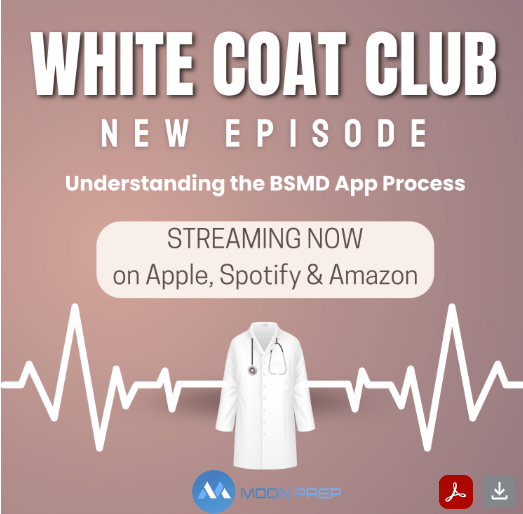
White Coat Club Episode – Understanding the BSMD App Process
Applying to a BS/MD program is rarely as simple as submitting one application and waiting for a decision. Many programs have multiple stages, including the initial undergraduate application, supplemental materials, additional essays, interview invitations, and final decisions that may arrive months later.
In this episode of White Coat Club, Nicole and Kiernan break down the BS/MD application process from start to finish. We explain how programs differ in their application requirements, what students should expect after submitting their initial applications, when supplemental applications and interviews may occur, and why staying organized throughout the fall and winter is essential.
We also discuss how to prepare for BS/MD interviews, understand the different admission outcomes, and navigate the requirements that may remain after acceptance.
Whether you’re a student applying to BS/MD programs or a parent trying to understand what comes next, this episode will help you approach the process with more confidence and a clear plan to stay on top of every step.
Ready for personalized guidance? Visit MoonPrep.com to schedule a free consultation.
Learn more or Listen here.