July 2026 Admissions News
July 2026 Preview –
What’s Coming This Month
📅 Mark Your Calendars – Key Summer 2026 Dates
🔬 Rising Researchers –Last Chance: Only 2 Summer Research Camps Remain!
🎓 Rising Seniors – Did You Know? 5 Behind-the-Scenes College Admissions Facts
🎓 ApplicationIQ –The Next Semester Starts This August!
⚕️ Med School Applicants –The Secondary Sprint: How to Survive Secondary Season Without Burning Out
📷 In the News – Moon Prep Featured Articles
📊 University Updates – What You Need to Know
🎙 White Coat Club Podcast – AI vs Real Essays
Mark Your Calendar!
✅ July 13: International German Olympics (IDO) [Foreign Language]
✅ July 21: National Junior Classical League Convention [The Classics]
✅ July 21: July ACT Score Release
✅ July – Rolling: World Scholars Academy
✅ July – Rolling: Dartmouth College Precollege
✅ July – Rolling: Northwestern University Pre-College
✅ July – Rolling: Wake Forest University Online Immersion Program
✅ July – Rolling: University of Notre Dame Pre-College
✅ July 31: NCTE REALM (Recognizing Excellence in Art & Literary Magazines) [Art & Literature]
✅ August 1: The Emerson Prize [History]
✅ August 7: August SAT – Registration Deadline
✅ August 14: September ACT – Registration Deadline
✅ August 14: New York Times Editorial Contests [Writing]
✅ August 31: Columbia Scholastic Press Association Gold Circle Awards [Journalism]

Last Chance: Only 2 Summer Research Camps Remain!
Only two Summer 2026 Research Camps remain, and both begin in July! Don’t miss your opportunity to gain hands-on research experience, strengthen your college application, and even work toward a publication that helps you stand out. Summer is one of the best times to invest in your future—but spots are filling quickly. Register now before the final camps begin!
Camp 2: Cardiovascular Health – The Medical and Social Factors Behind Disease, led by Loren B.
Schedule: Every Monday and Thursday (7/6/26 – 8/6/26) from 7:00p – 8:30p ET/ 4:00p – 5:30p PT
Learn more about Loren here!
Why You Will Love This Camp:
This camp introduces students to the social determinants of health, including socioeconomic status and environment, and their impact on cardiovascular disease. Students will review the anatomy and physiology of the heart and apply cardiology knowledge to real-world case study scenarios. They will explore common cardiology pathologies, learn to interpret clinical data and findings, and gain experience performing literature reviews. By combining medical knowledge with public health perspectives, students develop critical thinking skills and a deeper understanding of how social factors influence heart health.
Schedule: Every Monday and Thursday (7/20/26 – 8/20/26) from 7:00p – 8:30p ET/ 4:00p – 5:30p PT
Why You Will Love This Camp:
Biology Research with a Focus on Medicine introduces students to the intersection of biology and artificial intelligence. Students will use AI and machine learning tools to analyze biological data and explore how researchers answer complex questions in fields such as genetics, microbiology, and medicine. Students will develop analytical thinking skills while learning how computational tools are transforming modern biological research.
This course is tailored to accommodate various skill levels and is suitable for beginners.
View the syllabus
Camp Investment: $3500
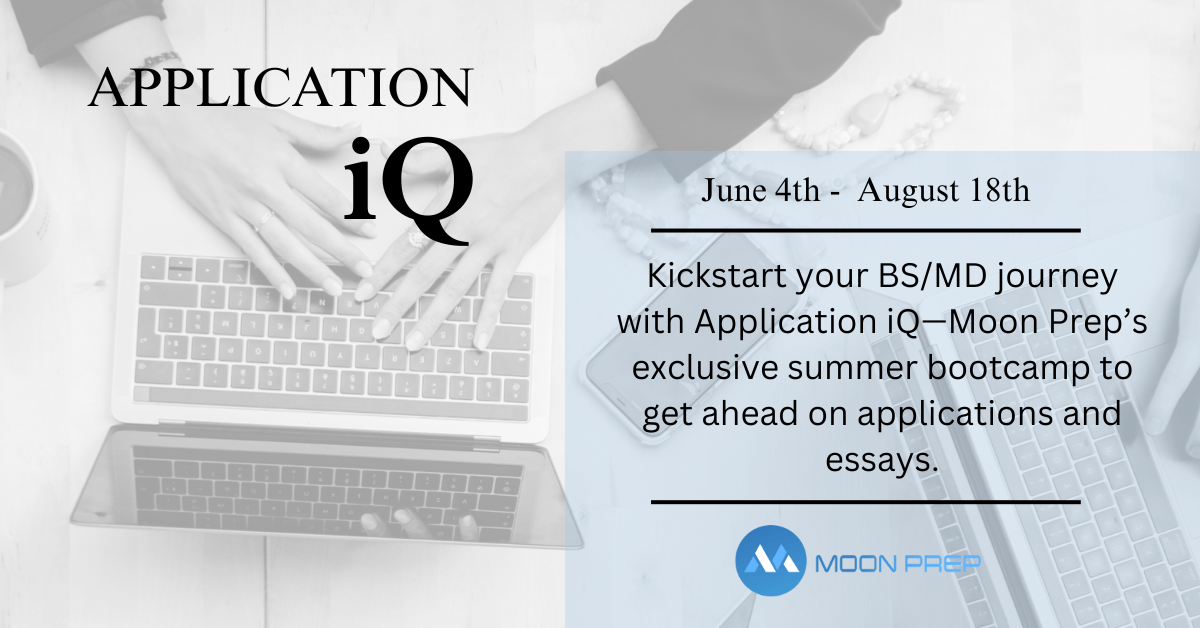
Application IQ: Semester 2 Resumes in August!
Missed the first round of AppIQ? There’s still time to join Semester 2: Application Completion & Next Steps, beginning Tuesday, August 4.
Don’t forget that all sessions are recorded so there is plenty of time to catch up on missed sessions before the next semester starts.
Designed to help rising seniors craft their strongest possible applications, this two-part series provides expert guidance on application completion, essay refinement, and final submission strategies. Students will gain valuable insights into what admissions committees are looking for, participate in interactive discussions, and have the opportunity to ask questions during live Q&A sessions.
Semester 2 Dates (7:30–9:00 PM EST):
-
Tuesday, August 4
-
Tuesday, August 11
-
Tuesday, August 18
Best of all, AppIQ is FREE for registered Moon Prep rising seniors. If you’re ready to put the finishing touches on your applications and begin senior year with confidence, be sure to register today and secure your spot!
Rising Seniors: Did You Know? 5 Behind-the-Scenes College Admissions Facts
Applying to competitive colleges and BS/MD programs can feel like a mystery. What actually happens after you hit Submit? Here are five insider facts that many applicants don’t discover until it’s too late.
💸 1. Free Application Weeks Can Save You Hundreds
Application fees can add up quickly—but they don’t always have to. Many colleges host Free Application Weeks throughout the fall, allowing students to apply without paying the typical application fee. If you’re applying to multiple schools, keeping an eye out for these events can save you hundreds of dollars.
❤️ 2. Some Colleges Track Demonstrated Interest
Did you know that some colleges pay attention to how interested you seem in attending? Opening admissions emails, attending virtual information sessions, touring campus, and connecting with admissions counselors can all demonstrate interest. While not every college considers it, those that do may view engaged applicants more favorably.
🧩 3. Admissions Officers Are Building a Class—Not Just Admitting the Highest GPAs
Admissions isn’t simply a competition for the highest GPA or SAT score. Colleges are building a campus community filled with future researchers, musicians, entrepreneurs, physicians, athletes, artists, and leaders. Your unique experiences and perspective may be exactly what helps your application stand out.
🏫 4. Your Application Is Read in the Context of Your High School
Admissions officers don’t compare every applicant on the same scale. They receive a profile of your high school that explains available courses, grading policies, class size, and academic opportunities. They’re evaluating how you’ve challenged yourself with the opportunities that were available to you.
🤝 5. Alumni Interviews Aren’t About Impressing Your Interviewer
Many students think alumni interviews are high-pressure tests—but that’s usually not the case. Most alumni interviews are informational and evaluative, not eliminative. Interviewers aren’t trying to stump you with difficult questions. Instead, they’re trying to learn who you are, what you’ll contribute to campus, and whether you’ll thrive in their community. Think of it as a conversation, not an interrogation.
💡 Final Tip
College admissions can seem unpredictable, but understanding how the process works can help you focus your energy where it matters most. Authenticity, preparation, and thoughtful reflection will always go further than trying to build the “perfect” application.
The Secondary Sprint: How to Survive Secondary Season Without Burning Out
For many medical school applicants, submitting the primary application feels like crossing the finish line—until the secondary applications start arriving. Within days or weeks, your inbox may be flooded with invitations asking you to answer dozens of additional essay prompts, each with its own mission, values, and deadlines.This stage of the application process can feel overwhelming, but with a thoughtful strategy, you can stay organized, submit strong applications, and avoid burnout.
Why Timing Matters
While most medical schools do not have official deadlines for submitting secondaries within a set number of days, admissions committees often review applications on a rolling basis. The sooner your application is complete, the sooner it can be considered for an interview.A good benchmark is the two-week rule: aim to return each secondary application within 14 days of receiving it. This demonstrates organization, sustained interest, and helps keep your application moving through the review process.
Build a System Before the Essays Arrive
One of the biggest mistakes applicants make is waiting until they receive a secondary before thinking about how they’ll complete it.Instead, create a tracking system that includes:
- Date received
- Recommended submission date (14 days later)
- Essay requirements
- Word limits
- Status (drafting, revising, submitted)
Expect Common Essay Themes
Although every school has unique questions, many ask similar things. Common prompts include:
- Why our medical school?
- Diversity and background
- Meaningful service experiences
- Leadership
- Overcoming adversity
- Gap year or academic challenges
- Future career goals
Prioritize Personalization
It can be tempting to simply change the school name and move on—but admissions committees notice.Spend time researching each school’s curriculum, community partnerships, clinical opportunities, research strengths, and mission. Then explain how your experiences and goals genuinely align with what that school offers.Specificity almost always creates a stronger essay than generic praise.
Pace Yourself
Secondary season is a marathon, not a sprint.Set realistic daily writing goals. For example:
- Draft one essay each morning.
- Revise one essay in the afternoon.
- Submit one completed secondary every day or two.
Protect Your Energy
Many applicants continue working, volunteering, conducting research, or taking classes while completing secondaries. That makes self-care essential—not optional.Schedule time to:
- Exercise or spend time outside.
- Get adequate sleep.
- Take regular breaks from writing.
- Stay connected with friends and family.
Don’t Chase Perfection
One of the biggest causes of delayed submissions is endless editing.A thoughtful, polished essay submitted within two weeks is generally far more effective than a “perfect” essay submitted a month later. Once you’ve answered the prompt completely, demonstrated reflection, and proofread carefully, trust your work and move forward.
Final Thoughts
Secondary season can feel relentless, but every essay is another opportunity to show admissions committees who you are beyond your grades and test scores.Stay organized. Follow the two-week rule whenever possible. Personalize your responses. Most importantly, remember that consistency—not perfection—is what gets applicants through this stage successfully.With a clear plan and a sustainable pace, you’ll be well-positioned for the next exciting step: interview invitations.

Check out our latest article:
10 Science Fairs and Competitions for Teen Innovators
University Updates and Numbers You Need to Know
📊 Planning to apply to Columbia in the future? The university has announced that it will once again require SAT or ACT scores, beginning with the 2027–2028 admissions cycle (for students enrolling in Fall 2028). Students applying during the 2026–2027 admissions cycle will still be able to apply under Columbia’s current test-optional policy, making this the final application cycle before the new testing requirement takes effect.
📊 Yale has officially ended its test-flexible policy, meaning applicants can no longer substitute AP or IB exam scores for the SAT or ACT. Students applying to Yale should plan to submit standardized test scores as part of their application.
📊 The University of the Pacific has announced plans to open a new medical school in 2030, expanding opportunities for future physicians in California. The school will be the first M.D.-granting medical school located outside Southern California, the Bay Area, and the Greater Sacramento region, helping address physician workforce needs across the state’s underserved communities.
📊 Santa Clara University and Sutter Health have announced the launch of the Mark & Mary Stevens School of Medicine, the first new M.D.-granting medical school in the San Francisco Bay Area in more than 100 years. Backed by a historic $175 million gift, the school aims to train future physicians through an innovative curriculum that integrates whole-person care, AI, digital health, and hands-on clinical training within Sutter Health’s network to help address California’s growing physician shortage.
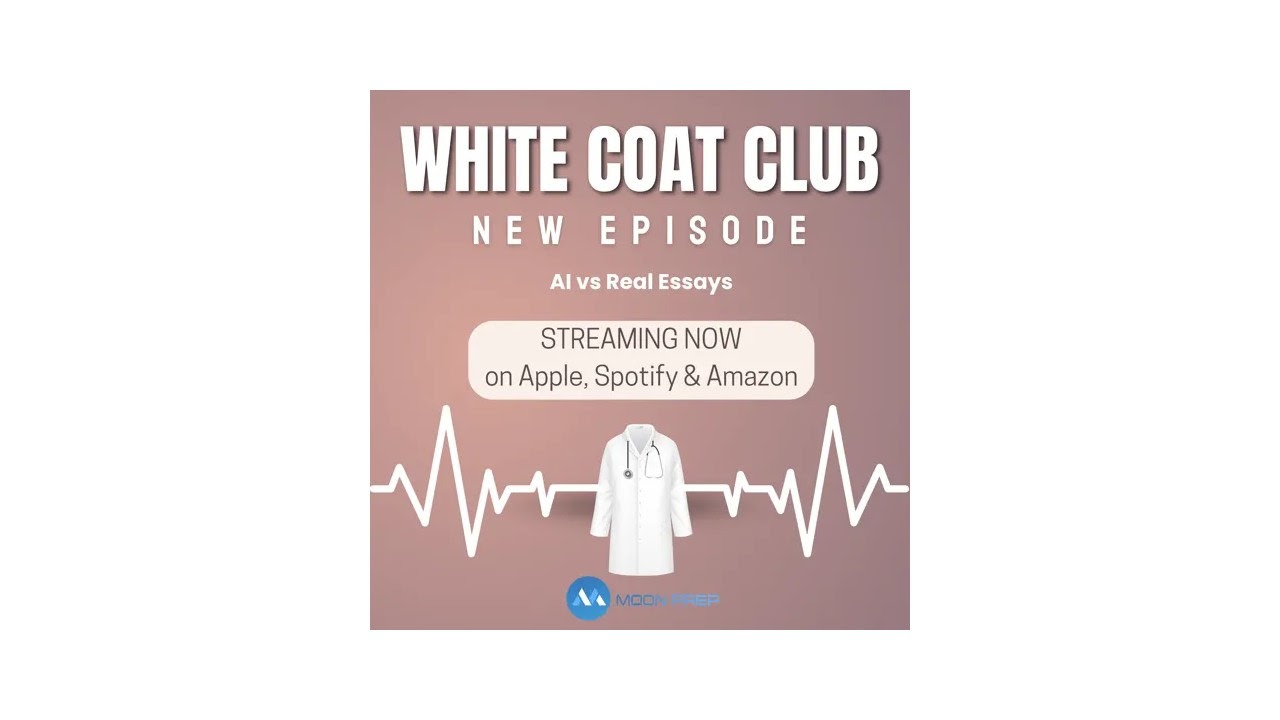
White Coat Club Episode: AI vs Real Essays
Artificial intelligence is becoming an increasingly common tool in education, but where should it fit into the college application process? In this episode, we explore the growing role of AI in admissions and discuss the critical difference between using AI as a helpful resource and allowing it to replace your authentic voice.
We begin with an important disclaimer: AI-generated essays should never be submitted as your own work in a college application. Admissions officers are looking for genuine student stories, experiences, and perspectives—not content created by a chatbot. While AI can be a useful tool for brainstorming, organizing ideas, and answering questions about the writing process, it should never become the author of your application.
We discuss some of the most common ways students use AI today, including generating essay topics, creating outlines, learning writing techniques, checking grammar, and researching colleges, scholarships, and academic opportunities. Used appropriately, AI can serve as a writing guide, reference book, or organizational assistant. However, it cannot replace the personal reflection, creativity, and authenticity that make a college essay memorable.
We also explore why overreliance on AI often leads to weaker applications. At Moon Prep, counselors can often identify essays that were heavily AI-generated due to recurring patterns, unnatural phrasing, and language that doesn’t match a student’s voice. Admissions offices are becoming increasingly familiar with these trends as well, regularly discussing common phrases, vocabulary, and writing styles that appear across AI-generated content.
Throughout the episode, we share practical guidelines for using AI responsibly. Learn when it can help, when it can hurt, and how to ensure that your essays remain uniquely yours. We compare AI-generated writing to the guidance students receive from counselors, teachers, and books: resources that provide direction without replacing the student’s own work.
Most importantly, we discuss why authenticity matters more than ever. In a competitive admissions environment where many students have similar grades, test scores, and extracurricular activities, essays often become the most personal and distinctive part of an application. Your story, your voice, and your perspective are what admissions committees want to hear—and no AI tool can tell that story better than you can.
Whether you’re beginning your college essays or wondering how AI fits into the application process, this episode will help you navigate the balance between leveraging technology and preserving what makes your application truly stand out.
Learn more here.