
Fall 2026 Rising Researchers Newsletter
Fall 2026 Preview –
What’s Coming This Month
📅 Mark Your Calendars – Upcoming October and November Dates
🔬 Rising Researchers Camps – Beyond the Calssroom: Explore Our Winter Research Camp
🎙 Summer Camp Instructor Spotlight – Meet Anahit
🔎 Want a Researcher Internship Next Summer? Your Summer 2027 Search Starts Now
🏅 Contests & Competitions – STEM Events for High School Students
🌐 Internships – STEM Internships for High School Students
📷 Publications – The Latest Editions of the Journal of Scientific Research Writing
Mark Your Calendar!
✅ October 15: First Major Application Deadline – Some Colleges, Scholarships, Honors Programs, and BSMD Programs use this deadline – Each school has its own deadlines and required materials, so stay vigilant and keep track of each one carefully!
✅ October 15: National Merit Scholarship Application Deadline – Open to National Merit Semifinalists; Invitations are shared with high schools in late August or early September
✅ October 15: American Mathematics Competitions (AMC) [STEM]
✅ October 16: October SAT Score Release
✅ October 21: American Academy of Neurology Neuroscience Research Prize [STEM]
✅ October 23: November SAT – Registration Deadline
✅ October 27: October ACT Score Release
✅ October 30: Conrad Challenge [STEM]
✅ November 5: Regeneron Science Talent Search [STEM]
✅ November 6: December ACT – Registration Deadline
✅ November 15: USA Biolympiad (USABO) [STEM]
✅ November 17: Winter Research Camp starts – Neural Plasticity – register here
✅ November 23: National Science Bowl [STEM]

Beyond the Classroom:
Explore Winter Research Opportunities
Our Winter Research Camps are officially open! These programs give students the chance to step beyond the classroom and experience research firsthand—building practical skills, exploring areas of scientific interest, and learning what the research process looks like in action.
Whether students are hoping to strengthen their research experience, discover a potential academic or career interest, or prepare for future STEM, pre-health, and college opportunities, these camps can be a valuable addition to their academic journey.
Space is limited, so interested students should register early to secure a spot.
Winter Camp: Neural Plasticity – How the Brain Learns, Changes, and Adapts led by Anahit S.
 Schedule: Every Tuesday and Friday (11/17/26 – 12/18/26 ) from 7:00p – 8:30p ET/ 4:00p – 5:30p PT
View the syllabus
Why You Will Love This Camp:
In this camp, students will explore one of neuroscience’s most exciting concepts: neuroplasticity, the brain’s remarkable ability to learn, adapt, and change throughout life.
You’ll explore how neuroplasticity allows the brain to adapt, form new connections, and strengthen or weaken existing ones as you learn new things. Discover how brain cells (neurons) communicate, how synapses and neural circuits change over time, and how these changes shape learning, memory, and brain development.
Throughout the camp, students will build valuable research and critical thinking skills by reading scientific literature, designing a research study, and presenting their findings in front of their peers in a research poster presentation.
This course is tailored to accommodate various skill levels and is suitable for beginners.
 Camp Investment: $3300 (Discount still available, Full price is $3500)
Sign up for this camp now!
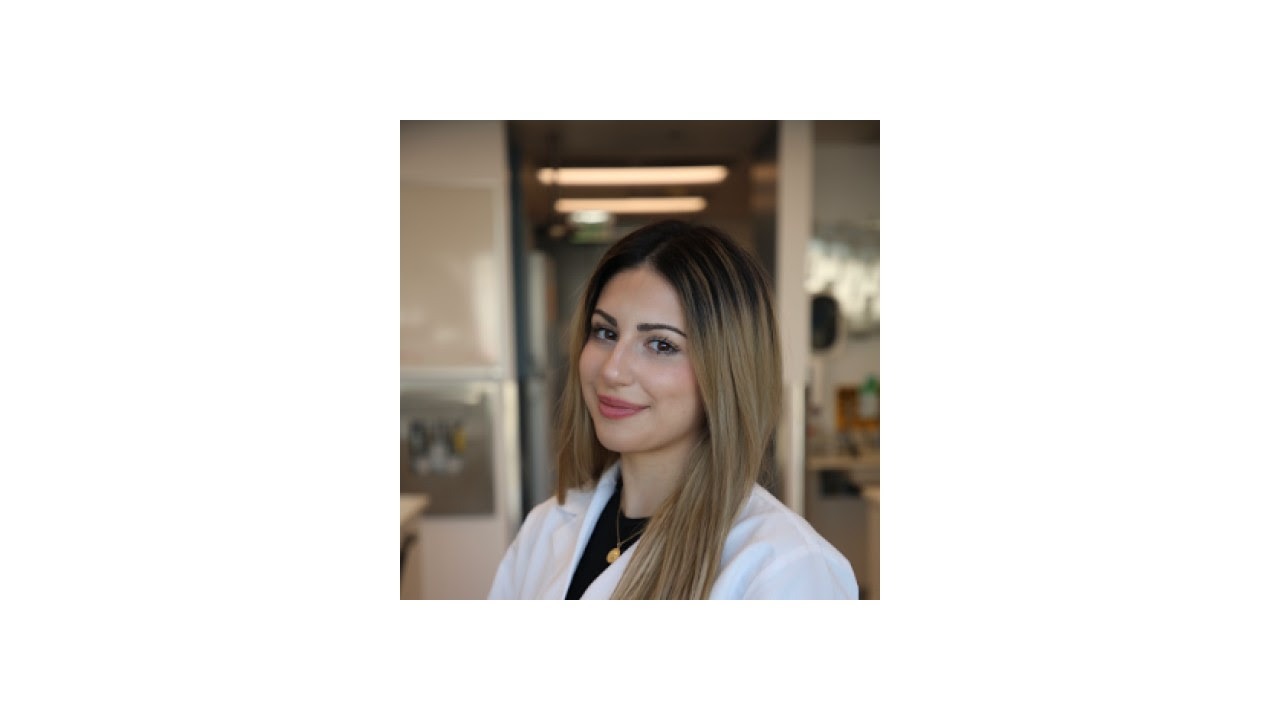
Instructor Spotlight: Meet Anahit
Anahit is a PhD candidate in neuromedicine with interdisciplinary training in electrical engineering. Her research focuses on developing new therapies for nerve regeneration and vision recovery using electrical stimulation. She studies how targeted electrical signals can help repair damaged nerves, improve communication between neurons, and restore visual function. Her work combines hands-on experiments in animal models with techniques that measure brain and visual system activity, allowing her to better understand how to promote healing and functional recovery. This translational approach gives her strong insight into both scientific research and its real-world medical applications.
Anahit has worked in research labs for almost a decade and has also mentored high school, undergraduate, and medical students in both hands-on experimentation and scientific thinking. Through her mentorship, she has guided students across all levels through procedures such as rodent surgeries, tissue harvesting, and cell culture, while also teaching hypothesis-driven experimental design, data analysis, and scientific writing. She has helped them build strong academic portfolios for college, medical school, and residency applications. Anahit has been instrumental in ensuring students work productively and strategically, positioning them to achieve tangible outcomes, such as publications and meaningful mentor relationships, that support strong letters of recommendation. Her experience working closely with faculty provides insight into what selective programs value, allowing her to offer targeted, strategic guidance. She is familiar with medical school and graduate program admissions and guides students to pursue clinical and research experiences to support powerful applications.
Research Focus:
-
Visual System
-
Neural Plasticity
-
Nerve Regeneration
-
Bioengineering/Electrical Engineering
Want a Research Internship Next Summer? Your Summer 2027 Search Starts Now
1. Figure Out What Actually Interests You
“I want to do medical research” is a starting point—not an application strategy.
Spend the next few months exploring specific areas such as neuroscience, cancer biology, genetics, biomedical engineering, public health, computational biology, infectious disease, chemistry, or environmental science.
Read articles. Explore university research labs. Watch lectures. Look up unfamiliar terminology.
By application season, you should be able to explain not only what interests you, but why.
2. Build Your Research List Before Applications Open
Create a spreadsheet of 15–25 possible programs and track:
- Eligibility and grade requirements
- Minimum age
- Location/residency restrictions
- Cost or stipend
- Application opening date
- Deadline
- Essays
- Recommendations
- School nomination requirements
Think of your research search like a college list: include reaches, targets, and alternatives.
3. Strengthen Teacher Relationships
Competitive programs frequently require teacher recommendations, particularly from science and math teachers.
The strongest letter doesn’t simply say, “She earned an A in AP Biology.”
It describes a student who asks thoughtful questions, works independently, collaborates well, responds to setbacks, thinks critically, and is genuinely curious.
You don’t necessarily need to ask for a letter yet. Instead, use this fall to give your teachers something meaningful to write about.
4. Show That Your Interest in Science Goes Beyond Your Grades
You don’t need previous laboratory research to obtain your first research experience.
But you should be able to demonstrate curiosity.
Consider Science Olympiad, HOSA, science fair, a coding project, an independent literature review, an online course, a data-analysis project, university lectures, or another activity that allows you to investigate something you find interesting.
The goal isn’t collecting another résumé entry. It’s being able to answer:”
Why do you want to conduct research?”
5. Learn a Skill
Fall is also an excellent time to add something to your research toolkit.
Depending on your interests, consider learning Python, R, statistics, Excel, data visualization, PubMed, basic bioinformatics, experimental design, or how to read a scientific paper.
This can be particularly valuable for freshmen and sophomores who aren’t yet eligible for many of the major research programs.
If you can’t apply yet, prepare now to become a stronger applicant later.
6. Ask About School Nominations
Here’s one students frequently miss.
Some research programs require students to be nominated by their high school—and schools may be limited in how many students they can nominate.
Ask your counselor or science department:”Does our school nominate students for any summer research programs, and do we have an internal deadline?”
Don’t wait until January to discover that your school’s selection process happened in November.
7. Don’t Limit Yourself to Formal Programs
You don’t need a famous program name to have an excellent research experience.
Students can also identify researchers at nearby universities, medical schools, hospitals, and research institutes and contact them directly.
Don’t send hundreds of generic emails. Find researchers whose work genuinely interests you, read about what their labs are studying, and write thoughtful, personalized messages explaining why you’re interested.
A strong strategy might include 10–15 formal program applications plus targeted outreach to professors and laboratories.
Your Summer 2027 Timeline
September–October: Explore research interests, build your program list, develop teacher relationships, and investigate school nomination requirements.
November–December: Update your résumé, identify potential recommenders, research faculty, and begin applications as they open.
January–February: Expect peak application season. Submit applications and begin targeted faculty outreach.
March–April: Finish later applications and continue contacting local researchers.
April–May: If a formal program hasn’t worked out, pivot toward local laboratories, faculty mentorship, university opportunities, or a structured independent project.
Remember: Meaningful Beats Prestigious
Especially for future premed and BS/MD applicants, don’t become obsessed with the name on the program.
A student who genuinely contributes to a local laboratory and can explain the research question, methodology, setbacks, results, and lessons learned may ultimately have a much stronger experience than someone who attends an expensive “medical research” program but spends the summer primarily observing.
The goal isn’t to collect a prestigious program for your résumé.
It’s to become someone who is genuinely curious about questions that don’t already have easy answers.
And you can start doing that now.
STEM Competitions and Opportunities for High School Students: Deadlines
Fall 2026
-
October 26, 2026 — Congressional App Challenge
-
October 30, 2026 — Conrad Challenge
-
November 5, 2026 — Regeneron Science Talent Search
-
November 23, 2026 — Samsung Solve for Tomorrow
-
January 27, 2027 — Toshiba/NSTA ExploraVision
-
Regional deadlines vary — Junior Science and Humanities Symposium
-
Local fair deadlines vary — Regeneron ISEF
-
State and event deadlines vary — HOSA Competitive Events
Ongoing / Online Competitions
- Microsoft Imagine Cup Junior — AI & tech project competition (Online/Global)
STEM & Health Internships and Research Programs:
Applications Opening This Fall
|
Opens |
Due Date |
Program |
Focus |
|
Early Oct. 2026 |
TBD |
Cancer / Biomedical Research |
|
|
Oct. 12, 2026 |
TBD |
Biomedical Research |
|
|
Mid-Oct. 2026 |
TBD |
Science / Engineering / Technology |
|
|
Nov. 2, 2026 |
Jan. 3, 2027 |
Engineering / Technology |
|
|
Nov. 2, 2026 |
TBD |
Bioscience / STEM Research |
|
|
Nov. 10, 2026 |
Feb. 1, 2027 |
AI / Medicine / Healthcare |
|
|
Dec. 1, 2026 |
Feb. 15, 2027 |
Biomedical / Laboratory Research |
|
|
Dec. 4, 2026 |
Jan. 29, 2027 |
Medicine / Biomedical Research |
|
|
Dec. 11, 2026 |
TBD |
Engineering / STEM Research |
|
|
Dec. 14, 2026 |
May 1, 2027 |
University Research |
|
|
Mid-Dec. 2026 |
Mar. 16, 2027 |
STEM / Medicine / Engineering |
|
|
Dec. 17, 2026 |
TBD |
Science / Engineering Research |
|
|
Dec. 2026 |
TBD |
Engineering / CS / Interdisciplinary STEM |
Our Students Are Showcasing Their
Work Through a Publication
The Journal of Scientific Research Writing highlights students who participated in the Rising Researchers research-intensive. Each student will receive a unique URL for their indexed research report. This ensures easy access, enhances visibility, and allows their work to be shared and cited within the academic community.
Click here to read more about research conducted by students in the Summer 2026 camps as well as prior camps.