May 2026 Admissions News
May 2026 Preview –
What’s Coming This Month
📅 Mark Your Calendars – Key May 2026 Dates
🔬 Rising Researchers – Spots are Going Fast – Secure Your Place Now Before the Early Bird Deadline Closes on June 1, 2026!
🎓 Rising Seniors – Why Summer Is the Smartest Time to Start Your College Essays
🎓 ApplicationIQ – Building More Than Just a Résumé
⚕️ Med School Applicants – Applications Are Live: Your First Move in the 2026–2027 Medical School Race
📷 In the News – Moon Prep Featured Articles
📊 University Updates – What You Need to Know
🎙 White Coat Club Podcast Featuring Rising Researchers Instructor – Loren
🎙 White Coat Club Podcast Featuring Rising Researchers Instructor – Dr. Ryan
✏️ SAT/ACT Prep – SAT & ACT in 2026–2027: What Applicants Need to Know Now
Mark Your Calendar!
✅ May 4 – 8 & May 11-15: AP Exams!
✅ May 22: June SAT – Registration Deadline
✅ June 1: Register by June 1 to save $200 on Rising Researchers Summer Camps. But don’t wait that long, as spots fill up.
✅ June 5: July ACT – Registration Deadline

Spots are going fast—secure your place now before the Early Bird deadline closes on June 1 !!
Summer break is almost here—don’t let it slip by. While others slow down, this is your opportunity to accelerate. Take action now to build real momentum with research and even a publication that can set you apart.
Join one of our Summer 2026 Research Camps:
Camp 1: Searching for Life in the Universe: The Intersection of Astronomy & Biology, led by Dr. Ryan.
 Schedule: Every Tuesday and Friday (6/30/26 – 7/31/26) from 7:00p – 8:30p ET / 4:00p – 5:30p PT
 Investment: $3500 (Early Bird Discount: Register by June 1 to save $200)
Why You’ll Love This Camp:
This camp brings astrobiology and space science to life by immersing students in the most compelling questions scientists are exploring today. Students will learn how exoplanets are discovered and examine statistical patterns that reveal their existence. They will explore the three essential criteria for life and apply that knowledge to evaluate the most promising places to search for life within our solar system and beyond.
Students gain authentic research and scientific writing experience. They will learn how to develop a compelling research question, locate and analyze scholarly literature, and understand the critical difference between objectively reporting results and interpreting scientific findings.
This course is tailored to accommodate various skill levels and is suitable for beginners.
View the syllabus
Sign up now
Camp 2: Cardiovascular Health – The Medical and Social Factors Behind Disease, led by Loren B..
Schedule: Every Monday & Thursday (7/6/26 – 8/6/26) from 7:00p – 8:30p ET/ 4:00p – 5:30p PT
Investment: $3500 (Early Bird Discount: Register by June 1 to save $200)
Why You’ll Love This Camp:
This camp introduces students to the social determinants of health, including socioeconomic status and environment, and their impact on cardiovascular disease. Students will review the anatomy and physiology of the heart and apply cardiology knowledge to real-world case study scenarios. They will explore common cardiology pathologies, learn to interpret clinical data and findings, and gain experience performing literature reviews. By combining medical knowledge with public health perspectives, students develop critical thinking skills and a deeper understanding of how social factors influence heart health.
This course is tailored to accommodate various skill levels and is suitable for beginners.
View the syllabus and secure your spot now.
Learn more and sign up here.
Camp 3: Bioinformatics Research: Biology Meets No-Code AI and ML Programming. Select a focus in either Medicine, Microbiology, or Plants for Beginners, led by Dr. Jedy.
Schedule: Every Monday & Thursday (7/20/26 – 8/20/26) from 7:00p – 8:30p ET/ 4:00p – 5:30p PT
Investment: $3500 (Early Bird Discount: Register by June 1 to save $200)
Why You’ll Love This Camp:
Bioinformatics Research: Biology Meets No-Code AI and ML Programming introduces you to the fast-growing field where biology and artificial intelligence intersect. You’ll use intuitive, no-code tools to analyze biological data while learning how machine learning drives discoveries in healthcare, microbiology, and plant science. Choose a focus area in Medicine, Microbiology, or Plants for beginners to tailor the experience to your interests. By the end of the camp, you’ll understand how computational tools are transforming modern biology, and you’ll have hands-on experience applying them yourself.
This course is tailored to accommodate various skill levels and is suitable for beginners.
View the syllabus
Why Summer Is the Smartest Time to Start Your College Essays
For rising seniors, summer isn’t just a break; it’s a strategic advantage. While many students push college essays to the fall, the strongest applicants use these quieter months to start early, think deeply, and write without pressure. Once senior year begins, academics, extracurriculars, and deadlines pile up quickly. Students who wait often rush their essays, while those who begin in summer submit more polished, thoughtful, and authentic applications.
College essays aren’t something you can produce in one sitting. The best ones require reflection, iteration, and time away from the page. Summer allows students to explore meaningful experiences, test different angles, and refine their voice. It’s also the ideal time to develop a cohesive narrative or what admissions officers often call a “story of self.” Whether that story highlights resilience, curiosity, leadership, or a passion for medicine, it takes time to uncover and communicate it effectively.
Starting early also leads to stronger feedback and better results. With drafts completed in the summer, students can seek input from mentors, counselors, or advisors and still have time to make meaningful revisions. Instead of surface-level edits under pressure, they can make substantive improvements in clarity, depth, and impact, a key differentiator in competitive admissions.
For students applying to BS/MD or BS/DO programs, this early start is even more critical. These programs often require multiple supplemental essays, program-specific prompts, and accelerated timelines, sometimes with deadlines earlier than traditional applications. Beyond strong writing, applicants must clearly articulate why medicine, why now, and why this pathway—a level of clarity and maturity that can’t be rushed. Summer provides the time to align clinical experiences, research, and personal motivations into a compelling, cohesive narrative that resonates with highly selective programs.
The bottom line: starting your college essays over the summer isn’t just helpful; it’s one of the highest-impact moves a rising senior can make. For BS/MD and BS/DO applicants especially, it can be the difference between a rushed application and one that is intentional, distinctive, and truly competitive.
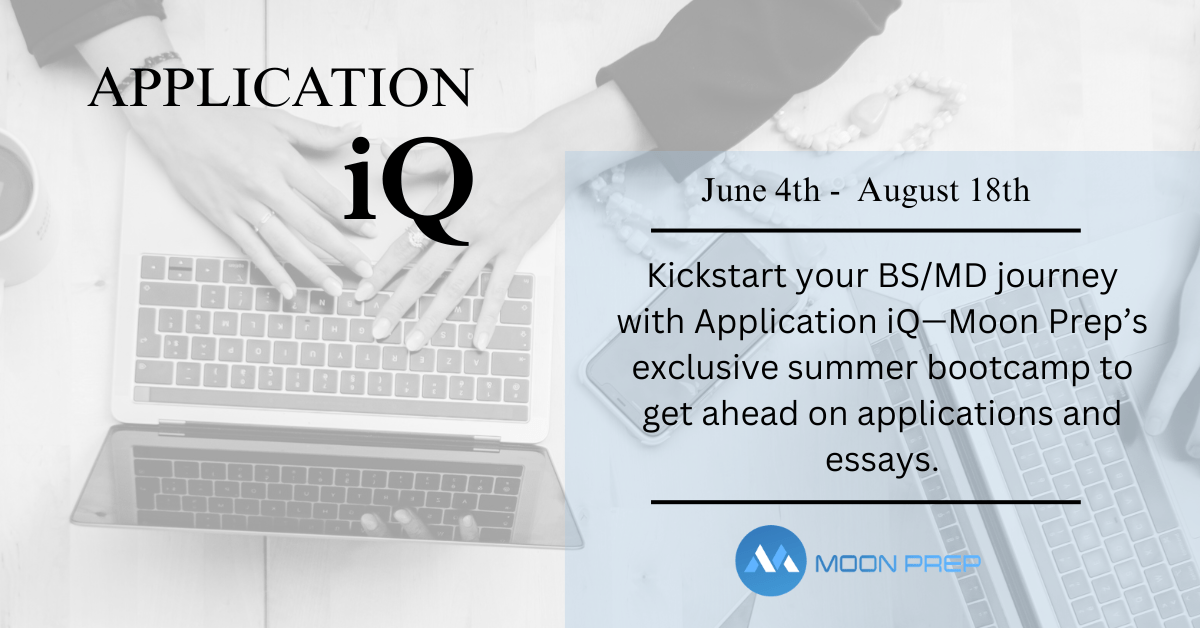
Application IQ: Building More Than Just a Résume
As college admissions become increasingly competitive, students need more than strong grades and test scores to stand out — they need direction, strategy, and meaningful experiences. Moon Prep’s Application IQ Summer Camp is designed to help students develop exactly that by guiding them through research, leadership, extracurricular positioning, personal branding, and long-term application planning.
Rather than focusing solely on checking boxes, Application IQ emphasizes helping students understand how admissions officers evaluate impact, initiative, and authenticity. Through mentorship and hands-on activities, students learn how to shape summer opportunities into compelling application narratives that strengthen future college, BS/MD, and scholarship applications.
Med School: Applications Are Live: Your First Move in the 2026–2027 Medical School Race
The application cycle for aspiring physicians is officially underway. Both the American Medical College Application Service and the American Association of Colleges of Osteopathic Medicine Application Service have opened for the 2026–2027 cycle, marking a critical starting point for students planning to enter medical school in fall 2027.
While submission timelines vary slightly between the two platforms, the message is the same: early preparation matters. Applicants should focus now on finalizing personal statements, securing strong letters of recommendation, and carefully entering coursework to avoid delays. Because both systems operate on rolling admissions, applying earlier in the cycle can significantly improve interview chances.
This is also the time to think strategically about school lists. Beyond GPA and MCAT ranges, applicants should consider program fit including curriculum style, clinical exposure, mission alignment, and overall student support. Submitting a thoughtful, polished application early not only demonstrates professionalism but also allows more time for secondary applications and interview preparation.
In a competitive admissions landscape, timing and organization can make a meaningful difference. Treat this opening window not just as a deadline, but as an opportunity to present your strongest, most intentional application.

Check out our latest article:
3 Medical School Admissions Trends in 2026
University Updates and Numbers You Need to Know
📊 Florida State University will introduce a new binding Early Decision option for the 2027 admissions cycle, allowing students who are certain about attending FSU to apply by Oct. 15 and receive a decision by Dec. 17. Admitted students must commit to enrolling and withdraw other applications, while still remaining eligible for financial aid and scholarships.
📊 Emory University’s Class of 2030 highlights the growing intensity of selective admissions, with over 43,000 applicants competing for just 5,317 spots across its two undergraduate colleges.
📊 Columbia University admitted just 2,581 students from a record 61,031 applicants for the Class of 2030—an acceptance rate of about 4.2%, underscoring the extreme selectivity at top institutions.
📊 MIT’s Class of 2030 admissions data reinforces just how competitive top STEM programs have become, with only 1,299 students admitted from 28,349 applicants—an overall acceptance rate of about 4.6%.
📊 The Universities of Wisconsin continue to emphasize a holistic, individualized admissions review process, evaluating students beyond just grades and test scores while maintaining clear academic preparation standards for first-year applicants. Recent updates also reinforce expanded access initiatives including test-optional policies through at least Summer 2027 and guaranteed admission pathways for top Wisconsin students signaling a broader commitment to accessibility and opportunity across the UW system.
📊 Tulane University continues to maintain a test-optional admissions policy for undergraduate applicants (except BS/MD), allowing students to decide whether SAT or ACT scores strengthen their application. Tulane also superscores both the SAT and ACT and encourages applicants with stronger scores to submit them, while emphasizing that students without scores will still receive full holistic review consideration.
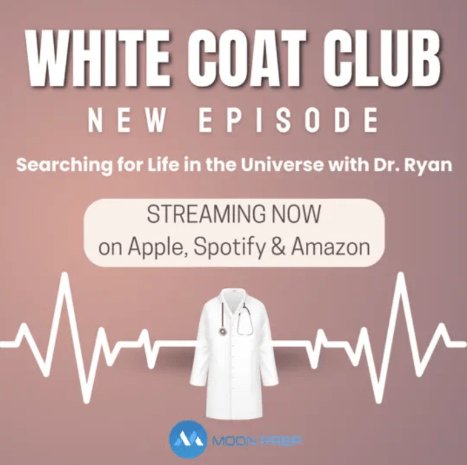
White Coat Club Featuring Rising Researchers Instructor – Dr. Ryan
What does it really take to get involved in scientific research as a student — even with no prior coding or research experience?
In this episode, we sit down with Dr. Ryan, an Adjunct Professor of Physics at Purdue University Fort Wayne and a world-renowned expert in computational astrophysics, to discuss how students can break into real scientific research earlier than they think.
From studying galaxy formation on some of the world’s most powerful supercomputers to contributing to a James Webb Space Telescope proposal, Dr. Ryan shares how curiosity—not prior experience—is often the most important ingredient for success in research.
We discuss:
-
How Dr. Ryan first became interested in space and physics
-
Common misconceptions people have about astrophysics
-
Why students don’t need prior coding experience to contribute to meaningful research
-
What makes real research different from a traditional classroom experience
-
How students can discover research interests before college
-
Why early research experience can be transformative for college admissions and future careers
Dr. Ryan also shares stories from mentoring students ranging from middle schoolers to adults in their 70s—and explains why he believes research should be accessible to anyone willing to learn.
Whether you’re a student interested in STEM, a parent navigating opportunities for your child, or simply someone fascinated by the universe, this episode offers an inspiring look into the world of astrophysics, mentorship, and scientific discovery.
Want to research with Dr. Ryan this summer? Learn more here.
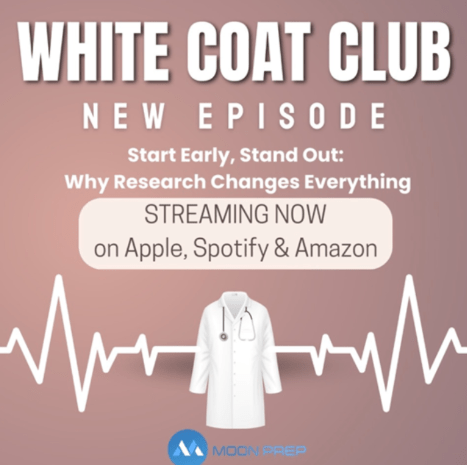
White Coat Club Featuring Rising Researchers Instructor – Loren B.
In this episode, we sit down with research expert and MD/PhD candidate Loren to explore why research is one of the most powerful experiences a high school student can pursue.
Currently completing her PhD in public health at the University of North Carolina at Chapel Hill, Loren shares her journey from her first college lab experience at Florida Atlantic University to earning a Master’s in Global Health at Duke University—and ultimately into the world of physician-scientist training.
We break down what research actually looks like for students, the different types of research (from wet labs to data analysis), and how early exposure can shape not only college applications—but long-term career paths.
Loren also gives an inside look at the Rising Researchers program and how students can get involved this summer to gain real, hands-on research experience.
If you’ve ever wondered whether research is “worth it” in high school—this episode will give you your answer.
Interested in learning more about Rising Researchers? Visit https://risingresearchers.com.
SAT & ACT in 2026–2027:
What Applicants Need to Know Now
The standardized testing landscape isn’t disappearing; it’s evolving. For students applying in the 2026–2027 cycle and beyond, the SAT and ACT remain important tools, but how they’re used in admissions is shifting in meaningful ways.
At a high level, most colleges across the country continue to operate under test-optional policies. However, that doesn’t tell the full story. A growing number of highly selective institutions have reinstated standardized testing requirements. This signals a clear shift: while testing may be optional at many schools, it is once again becoming expected (and often advantageous) at the most competitive ones.
At the same time, the exams themselves are changing. The College Board has fully transitioned the SAT to a digital, adaptive format. The test is now shorter, more streamlined, and adjusts in difficulty based on student performance. This means strategy matters more than ever.
Not to be outdone, the ACT has introduced updates of its own. The ACT is becoming more flexible, with a shorter testing experience and even an optional science section. While it remains a linear (non-adaptive) exam, these changes are designed to better compete with the digital SAT and meet evolving student preferences.
One of the biggest misconceptions right now is around the term “test-optional.” While it’s true that many schools allow students to apply without scores, data consistently shows that a large percentage of admitted students, especially at selective institutions, still submit them. In practice, a strong score can serve as a meaningful advantage, helping to validate academic readiness and distinguish applicants from a competitive pool.
For students pursuing accelerated medical pathways, this becomes even more important. Nearly all BS/MD and BS/DO programs require an SAT or ACT score as part of the application process, regardless of whether the undergraduate institution itself is test-optional. These programs are among the most competitive in the country, and standardized testing remains a key metric for assessing readiness for rigorous, combined-degree training.
The bottom line: testing isn’t gone; it’s strategic, and for many students, especially those targeting competitive colleges or direct medical programs, it can still be a powerful lever in the admissions process.
At Moon Prep, we help students navigate this evolving landscape with confidence. From building a personalized testing plan to maximizing score potential, our expert tutors provide targeted support every step of the way. Moon Prep offers comprehensive tutoring for both the SAT and ACT, ensuring you’re prepared, competitive, and ready to stand out.
Contact your Moon Prep counselor today to get started!